What Is the Blue Stuff in Porta Potties?
It is not water dye for decoration. The blue liquid is doing four separate jobs at once, and its colour is a deliberate signal.

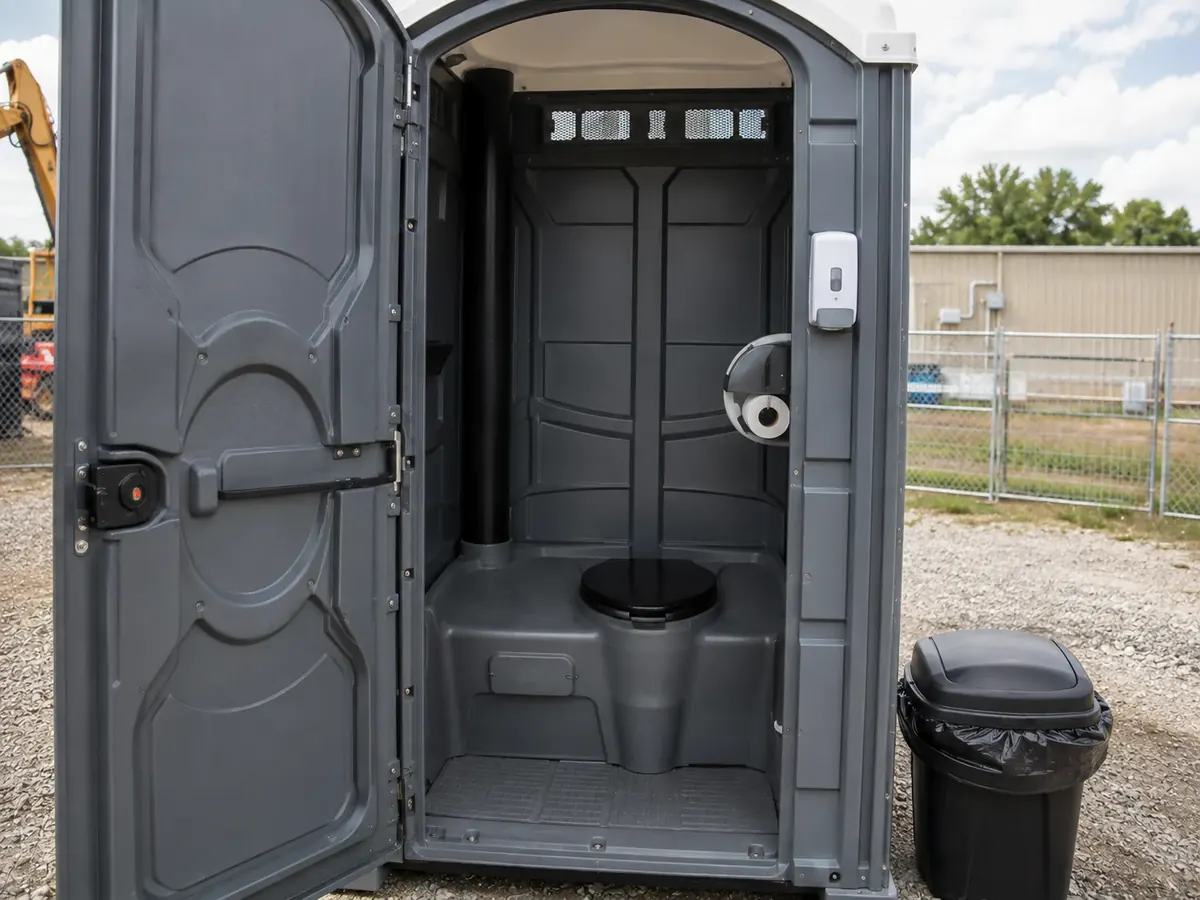
What it actually is
The blue liquid — the trade calls it blue juice, tank charge or deodoriser — is a purpose-made chemical treatment added to the holding tank after every pump-out, along with a few gallons of water. It is not there to clean the unit and it is not simply dyed water. It is a working formulation doing several jobs at once.
Most products combine four kinds of ingredient. A biocide or bacteriostat slows the bacteria that generate odour. Surfactants and detergents break surface tension so solids and toilet paper disperse rather than sitting in a mass. Fragrance masks whatever the first two do not eliminate. And dye — almost always blue — hides the contents from view.
Why blue, specifically
The colour choice is practical rather than aesthetic, and it does two useful things.
It hides the tank contents
A deep blue is opaque enough at working concentration that a user looking into the bowl sees colour rather than what is underneath. That is a meaningful part of why a serviced unit feels acceptable to use. Blue also reads as clean and clinical in a way that brown, green or red does not.
It shows when the charge is spent
This is the part most people never notice. Fresh treatment is vividly blue. As the tank fills and waste dilutes and reacts with it, the colour shifts through blue-green to green, and eventually to a murky brown. Service technicians read that shift as a rough indicator that the chemical charge is exhausted and the tank is overdue. If you look into a unit and see green or brown rather than blue, it needs servicing sooner rather than later.
The formaldehyde question
For decades the standard formulations were formaldehyde-based. Formaldehyde is extremely effective at stopping bacterial activity, which is exactly what you want for odour control, and it was cheap.
The problem appears at the other end of the process. Portable toilet waste is hauled to wastewater treatment plants, and those plants rely on living bacterial colonies to break sewage down. A strong biocide arriving in a tanker load can suppress that biology. Many treatment facilities responded by restricting or refusing formaldehyde-treated loads, and some jurisdictions regulate it directly. Formaldehyde also carries its own worker-exposure concerns.
The result is that much of the industry has moved to formaldehyde-free products, typically built on quaternary ammonium compounds, biological or enzyme-based actives, or nitrate-based chemistry that works with treatment plants rather than against them. If it matters for your site or your local disposal rules, ask a supplier what they actually use — it varies by market and by operator.
Is it dangerous?
Treat it as an industrial cleaning chemical, because that is what it is. In the tank, at working dilution, inside a unit being used normally, it presents no meaningful risk — you are not in contact with it.
Concentrate is a different matter. It can irritate skin and eyes and should never be handled without gloves and eye protection. It should never be swallowed, and it is not something children should be able to reach. Suppliers publish a safety data sheet for whatever product they use, and on a job site that SDS belongs in the same file as everything else you keep.
The practical rules for a renter are simple. Do not add anything to the tank yourself. Do not tip other chemicals in — bleach in particular can react badly with tank chemistry in an enclosed space. And do not attempt to drain or dispose of tank contents; that is regulated waste and it has to go to an approved facility.
Why you should not top it up yourself
It is a reasonable-sounding idea: the blue has gone green, buy some deodoriser and add it. In practice it rarely helps and often hurts.
Colour change is a symptom of a full or overloaded tank, not of a chemical shortage. Adding more treatment to a tank that needs pumping addresses the smell for a short time while the actual problem — capacity — keeps getting worse. Dosing also matters: these products are formulated for a specific volume of water in a specific tank size, and guessing produces either an ineffective mixture or an unnecessarily aggressive one.
If a unit is turning colour faster than the service schedule anticipated, the honest fix is more frequent servicing. That is a phone call, and on a long rental it is a schedule adjustment rather than a fault.
What the colour tells you as a customer
It is a genuinely useful field check, and it takes two seconds. Walk past a cluster and glance into a unit. Deep blue means it has been serviced recently and has capacity in hand. Green means the charge is working but the tank is getting there. Brown, or a strong smell despite a functioning vent, means it is overdue.
On a multi-week job site that check is worth doing weekly across your standard units. If units are consistently green by mid-week on a schedule built for weekly service, the schedule was built for a smaller crew than you actually have, and it is cheaper to correct that than to live with it.
Frequently asked questions
It is a deodorising tank treatment added after every pump-out. It typically combines a biocide to slow odour-causing bacteria, surfactants to disperse waste and paper, fragrance, and blue dye to conceal the tank contents.
The colour shifts from blue through green to brown as waste dilutes and reacts with the treatment. It is a rough visual signal that the chemical charge is spent and the tank is due for servicing.
Treat it as an industrial cleaning chemical. At working dilution inside a tank it poses no meaningful risk to users, but the concentrate can irritate skin and eyes, should never be swallowed, and should be handled with gloves and eye protection. Suppliers publish a safety data sheet for the product they use.
Much of the industry has moved away from it, because formaldehyde can suppress the bacteria that wastewater treatment plants rely on, and many facilities restrict treated loads. Formaldehyde-free formulations are common now, but it varies by operator, so ask if it matters for your site.
It is not advisable. A colour change usually means the tank is full rather than short of chemical, so topping up masks a capacity problem while it gets worse. Dosing is also matched to tank size and water volume. Ask for more frequent servicing instead.
Sources
Regulations change and local requirements vary. Confirm current requirements with the authority having jurisdiction for your site.
Star Portable Restrooms Editorial Team
Star Portable Restrooms publishes rental planning guides and helps customers make inquiries to local providers. Articles use the sources listed on each page; they are not accounts of equipment owned or jobs performed by Star. Confirm the equipment, price, and service plan with your rental provider.
About Star →Check availability for your site
Call with your delivery ZIP code, dates, project type, and estimated attendance or crew size.