Porta Potty Usage: What Belongs Inside?
Almost every servicing problem on a long rental traces back to something that should never have gone into the tank.

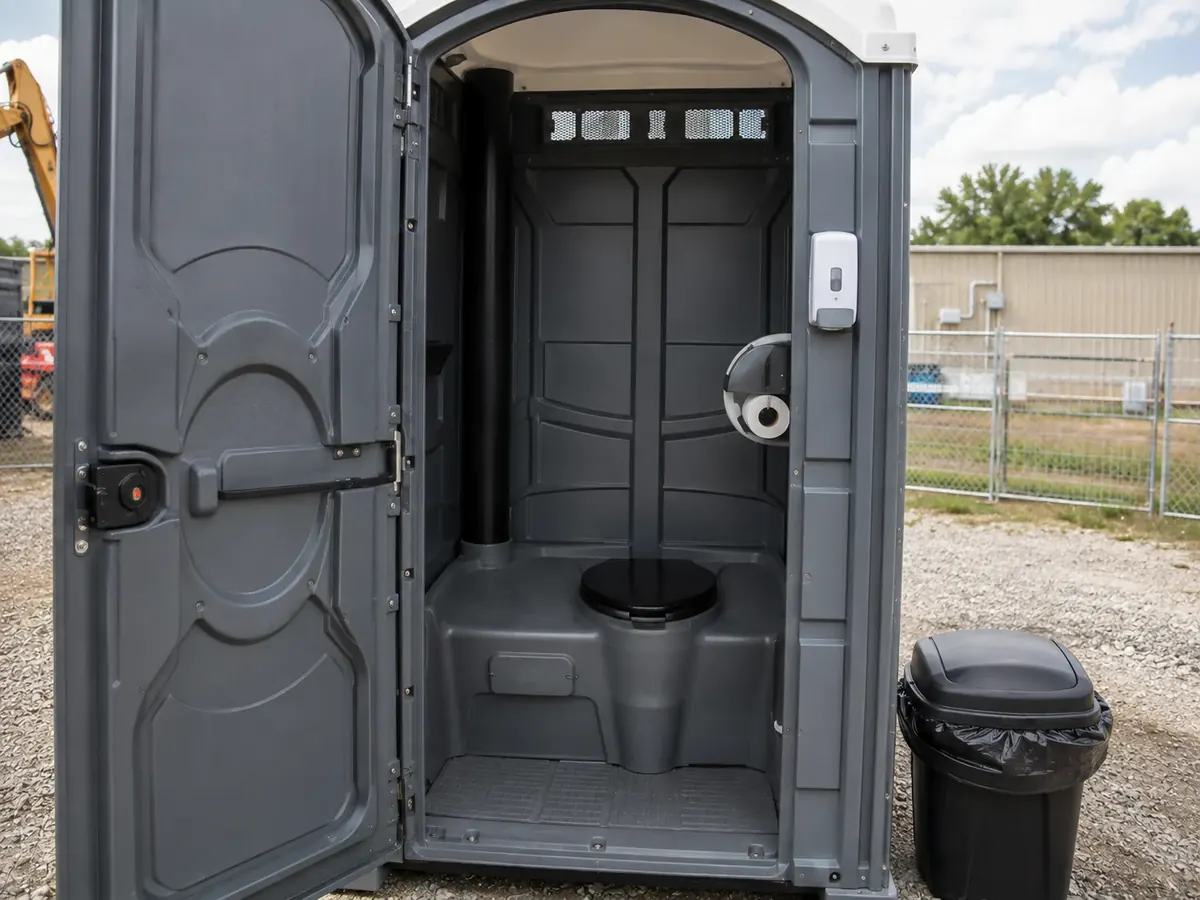
How a portable toilet actually works
A portable toilet is a holding tank, not a plumbing connection. Waste collects in a sealed reservoir with a deodorising treatment and stays there until a service truck pumps it out. Nothing is carried away between visits and nothing is broken down by a sewer system, which is why the contents of the tank matter so much more than they do in a building.
That single fact explains every rule that follows. Anything that does not dissolve or pump cleanly stays in the tank, interferes with the treatment, or blocks the pump-out equipment — and it stays there until the next scheduled visit.
What belongs inside
Human waste and standard toilet paper. That is the complete list. Standard toilet paper is designed to break down quickly and is fully compatible with holding tanks and pump-out equipment, which is why units are stocked with it.
Hand sanitiser, where provided, is for use inside the unit but should not be poured into the tank. If a handwashing station is present, use it for washing rather than the unit itself.
What does not — and why
Four categories cause nearly every service problem. The reasoning is the same in each case: if it does not dissolve or pump cleanly, it stays in the tank until someone deals with it.
Wipes, including "flushable" ones
Wipes are built to hold together when wet, which is the opposite of what a holding tank needs. They do not disperse, they tangle during pump-out, and they are the leading cause of service call-outs on long rentals. The flushable label refers to clearing a household toilet bowl, not to breaking down afterwards.
Trash and hygiene products
Bottles, cans, food packaging, and paper towels take up tank capacity and can jam pump equipment. Feminine hygiene products and diapers behave the same way. Where they are expected, a separate lined disposal bin beside the unit is the right solution.
Chemicals and job-site liquids
Bleach, solvents, fuel, and paint interfere with the deodorising treatment, can create hazardous reactions in an enclosed tank, and complicate lawful waste disposal. Never use a rental unit as a disposal point for liquid waste.
Foreign objects
Tools, phones, PPE, and construction debris can damage pump-out equipment and often cannot be recovered. If something is dropped in, report it rather than leaving it for the service crew to discover.
Preventing problems on site
A short, clearly worded notice inside each unit prevents most misuse. On construction sites, adding it to the toolbox talk when units arrive works better than a sign alone. For events, a small sign plus a visible trash bin beside the cluster removes the reason people improvise in the first place.
Provide the alternative rather than only the prohibition. A lined bin next to the units, sanitiser or a handwashing station within sight, and adequate lighting after dark solve the practical problems that lead to misuse. Well-maintained standard units handle heavy use perfectly well when they are used as intended.
Placement plays a part too. Units in poorly ventilated or awkward spots attract more misuse and show problems faster, which is one of several reasons indoor placement is generally discouraged. Somewhere open, visible, and easy to reach tends to stay in better condition.
If a problem does occur, report it promptly rather than waiting for the next visit on the service schedule. A blocked or damaged unit discovered on a routine visit has been out of action for days; the same problem reported the day it happens is usually a quick fix.
Frequently asked questions
No, including wipes labelled flushable. They are designed to stay intact when wet, so they do not break down in a holding tank and are a leading cause of service problems. Use the trash bin instead.
Standard toilet paper is fine and is what units are stocked with. It breaks down quickly and is compatible with holding tanks and pump-out equipment.
No. Bleach, solvents, fuel, and paint interfere with the deodorising treatment, can create hazardous reactions in an enclosed tank, and complicate lawful disposal. Never use a rental unit for liquid waste disposal.
Report it as soon as it happens. Foreign objects can damage pump-out equipment, and a prompt report is usually a quick fix rather than a longer repair.
Put a clear notice inside each unit, place a visible lined trash bin beside the cluster, and make sure there is adequate lighting after dark. Providing the alternative works better than a prohibition alone.
Sources
Regulations change and local requirements vary. Confirm current requirements with the authority having jurisdiction for your site.
Star Portable Restrooms Editorial Team
Star Portable Restrooms publishes rental planning guides and helps customers make inquiries to local providers. Articles use the sources listed on each page; they are not accounts of equipment owned or jobs performed by Star. Confirm the equipment, price, and service plan with your rental provider.
About Star →Check availability for your site
Call with your delivery ZIP code, dates, project type, and estimated attendance or crew size.