Can You Put Tampons in a Porta Potty?
The short answer is no — and if that leaves someone with nowhere to put it, that is a planning failure, not a user failure.

The direct answer
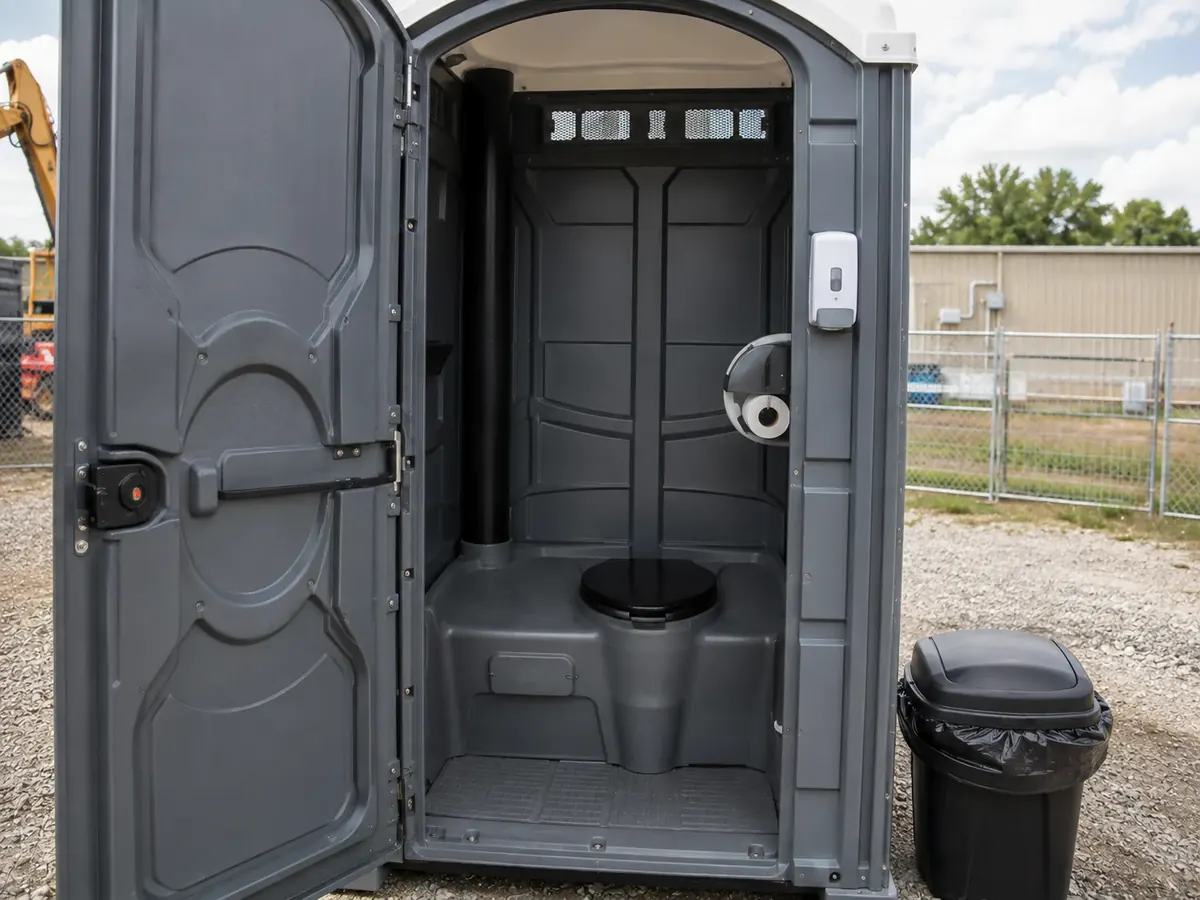
No — tampons, pads, liners and applicators should not go into a portable toilet. They belong in a lidded waste bin, and if a unit does not have one, that is a gap the organiser should close rather than a problem the user should have to solve.
This is not a squeamishness rule or an arbitrary restriction. It comes from how the tank physically works, and the same rule applies to wipes, nappies and any other absorbent product.
Why the tank cannot handle them
A portable toilet is a sealed holding tank, not a connection to a sewer. Nothing flows away. The chemical treatment in the tank is formulated to break down human waste and standard toilet paper — paper that is specifically designed to disperse quickly in water.
Menstrual products are engineered to do the exact opposite. Their entire function is to absorb liquid and hold together while wet. Dropped into a tank they stay intact, they swell, and they remain there until the tank is pumped.
At pump-out they cause the actual problem. Intact fibrous material is drawn toward a suction hose and tangles, and a blockage in the hose or pump means a technician stops mid-route to clear it. On a busy event weekend that delay propagates across every remaining stop. Applicators, being rigid plastic, can damage equipment outright.
What to provide instead
The fix is inexpensive and takes almost no planning effort. It just has to actually be there.
A lidded, lined bin in the unit
A small waste bin with a lid and a liner, mounted or placed inside the cabin, is the standard provision. The lid matters for odour and for dignity. The liner matters because it is what makes emptying quick and hygienic. Many operators can supply units already fitted with one — ask when you book rather than assuming.
In every unit, not just one
Providing disposal only in the accessible unit, or only in a single designated unit, forces people to seek out a specific cabin, which defeats the purpose. Put it in every unit. The cost difference across a cluster is negligible and the difference in experience is not.
Emptying on a schedule
A bin that is full by mid-afternoon is no better than no bin. On a multi-day event or a long site rental, bin emptying should be part of the agreed service scope. Confirm whether your operator handles it or whether it falls to your own staff.
Supplies, where it makes sense
At larger events, weddings, festivals and workplaces with long shifts, stocking basic supplies alongside the disposal bin is increasingly common and costs very little. It is a small gesture that people notice.
Why this is a planning issue
Roughly half of any crowd menstruates at some point, and a meaningful fraction of them on any given day. Treating disposal as an edge case rather than a baseline requirement is simply an oversight.
When there is no bin, people do one of three things: they use the tank, which causes the problems above; they wrap it and carry it out, which is unpleasant; or they leave the unit, which is worse for everyone. None of those outcomes is the user being inconsiderate — all three are what happens when the provision was not made.
Some jurisdictions include sanitary disposal in event permit conditions, particularly for larger gatherings, so it may not even be optional where you are. Check the permit requirements alongside your unit count.
What to do if there is no bin
If you are a user and there is genuinely no disposal provided, wrapping the item in toilet paper and putting it in the nearest external rubbish bin is the least bad option. It is not ideal and you should not have to, but it is better than the tank.
If you are running the site or event, and someone raises it, treat it as feedback worth acting on immediately. Bins can usually be added the same day, and it is one of the cheapest improvements available to you.
The wider rule
The same reasoning covers everything absorbent or non-dispersing: wet wipes including those sold as flushable, nappies, paper towels, cotton pads and dressings. If it is built to stay intact when wet, the tank cannot process it.
The usage rules are worth stating plainly, because they cover every case people ask about: human waste and standard toilet paper go in the toilet, and everything else goes in a bin. Provide the bin, and almost every usage problem on a rental disappears.
Frequently asked questions
No. Menstrual products are designed to absorb liquid and hold together when wet, so they do not break down in a holding tank and can tangle in pump-out equipment. They belong in a lidded, lined waste bin inside the unit.
It stays intact until the tank is pumped, then risks tangling in the suction hose or pump. A blockage stops a technician mid-route, which delays every remaining stop on that run. Applicators can damage equipment outright.
Yes. Providing disposal in only one designated unit forces people to seek out a specific cabin, which defeats the purpose. The cost across a cluster is negligible.
Confirm it when you book. Some operators include bin emptying in the service scope; on other arrangements it falls to your own staff. On multi-day events it needs to be scheduled either way.
Wrapping the item and using the nearest external rubbish bin is the least bad option. If you are running the site, treat it as feedback to act on the same day — bins can usually be added quickly.
Sources
Regulations change and local requirements vary. Confirm current requirements with the authority having jurisdiction for your site.
Star Portable Restrooms Editorial Team
Star Portable Restrooms publishes rental planning guides and helps customers make inquiries to local providers. Articles use the sources listed on each page; they are not accounts of equipment owned or jobs performed by Star. Confirm the equipment, price, and service plan with your rental provider.
About Star →Check availability for your site
Call with your delivery ZIP code, dates, project type, and estimated attendance or crew size.