Can You Put a Porta Potty Indoors?
It is occasionally done, but indoors introduces problems that outdoor placement simply does not have.

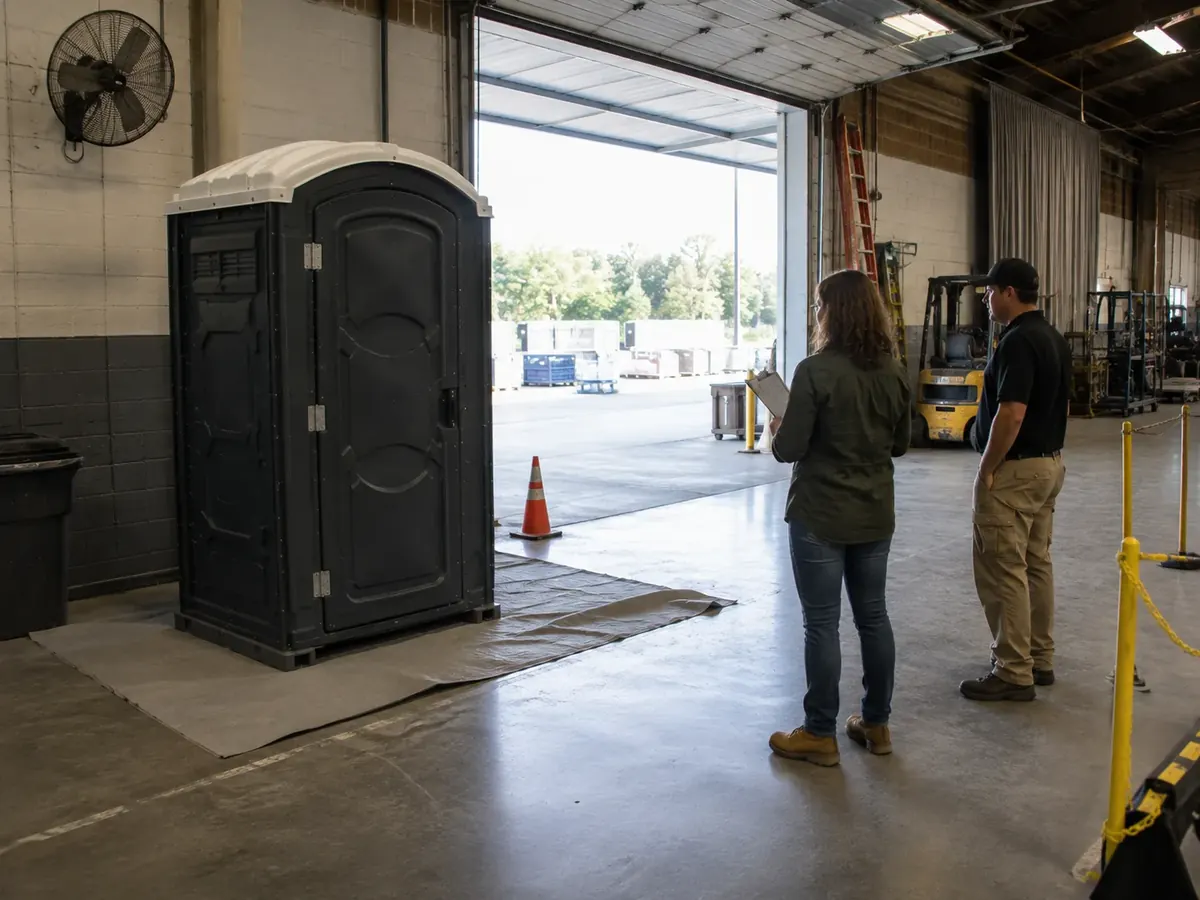
Check model instructions and venue approval
Do not assume an outdoor unit is suitable indoors. Ask for model instructions and check ventilation, servicing access, accessible approaches, and fire/egress arrangements with the venue.
Star provides inquiry assistance, not approval of a building installation. The supplier and responsible venue authority must confirm the proposed setup.
The short answer
Sometimes, but it is rarely the right solution. Standard portable toilets are designed for outdoor placement where natural airflow handles ventilation and a service truck can reach the unit directly. Move one inside and both of those assumptions break, which is why most venues either prohibit it outright or attach conditions that make it impractical.
There are genuine exceptions — large open industrial spaces, partially enclosed structures, warehouses with roller access and good airflow. But "indoors" in the sense of a finished interior room is usually the wrong tool for the job.
Ventilation and odour
Portable toilets rely on vent pipes and ambient airflow to manage odour. In an enclosed space with limited air exchange, odour concentrates rather than dispersing, and the deodorising treatment in the tank is not designed to compensate for that. The problem also compounds with usage, so a placement that seems acceptable in the first hour may not be by the end of the day.
Any indoor placement needs a serious ventilation assessment — not an assumption that a nearby door will be propped open.
Floor protection and stability
Units must sit on a firm, level surface. Indoors that raises questions outdoor placement does not: whether the floor finish will be damaged, whether the loaded weight is acceptable for the structure — particularly above ground level — and what happens in the event of a spill during use or servicing.
Protective matting under and around the unit is a normal condition, and many venues require it in writing. Confirm floor loading with the venue before committing to any placement above ground level.
Service access is usually the deciding factor
This is where most indoor plans fail. Servicing requires a truck with a pump hose to reach the unit. Hose runs have practical length limits, and routing one through a building interior means through doorways, across finished floors, and past whatever else is happening in that space.
For a single-day rental with no servicing required, this may not arise. For anything longer, work out the servicing route before the placement is agreed. A unit that cannot be serviced is a unit that stops working, and indoors that becomes a much bigger problem than it would outside.
Better alternatives
Where the goal is an indoor-quality restroom experience, a restroom trailer is normally the right answer. It provides flushing toilets, running-water sinks, lighting, and climate control in a self-contained unit that parks outside and connects to utilities, which sidesteps the ventilation and servicing problems entirely.
Where the goal is weather protection, a sheltered outdoor placement — under a canopy, against a building on the lee side, in a covered loading area — usually achieves it without the complications. A quick site review will often find a spot that is close, sheltered, serviceable, and acceptable to the venue.
Either way, check early. Trailer models and unit types available for your dates depend on local inventory, and the alternatives narrow considerably once a date is close.
Whatever you choose, get venue approval in writing and confirm fire code compliance with the local authority. Portable units must never block an exit route, an exit door, or a fire lane — that is a life-safety matter, and it is the one condition with no flexibility in it at all.
Frequently asked questions
Occasionally, in large open spaces with good airflow, but it is rarely ideal. Ventilation, floor protection, fire code, and service access all become harder indoors. Most venues either prohibit it or attach conditions that make it impractical.
Portable toilets rely on vent pipes and ambient airflow. An enclosed space with limited air exchange concentrates odour instead of dispersing it, so any indoor placement needs a genuine ventilation assessment rather than an assumption that a door will stay open.
That is usually the deciding constraint. Servicing needs a pump hose run from the truck to the unit, and hose length and routing through a building are real limits. Work the service route out before agreeing the placement.
A restroom trailer parked outside gives an indoor-quality experience without the ventilation and servicing problems. For weather protection alone, a sheltered outdoor placement is usually simpler.
Yes, and get it in writing. Confirm fire code compliance with the local authority as well. Units must never block an exit route, exit door, or fire lane.
Sources
Regulations change and local requirements vary. Confirm current requirements with the authority having jurisdiction for your site.
Star Portable Restrooms Editorial Team
Star Portable Restrooms publishes rental planning guides and helps customers make inquiries to local providers. Articles use the sources listed on each page; they are not accounts of equipment owned or jobs performed by Star. Confirm the equipment, price, and service plan with your rental provider.
About Star →
Check availability for your site
Call with your delivery ZIP code, dates, project type, and estimated attendance or crew size.