How Much Does a Porta Potty Weigh?
Use the supplied model’s specifications and expected contents to assess weight. An empty figure is not an operating load.

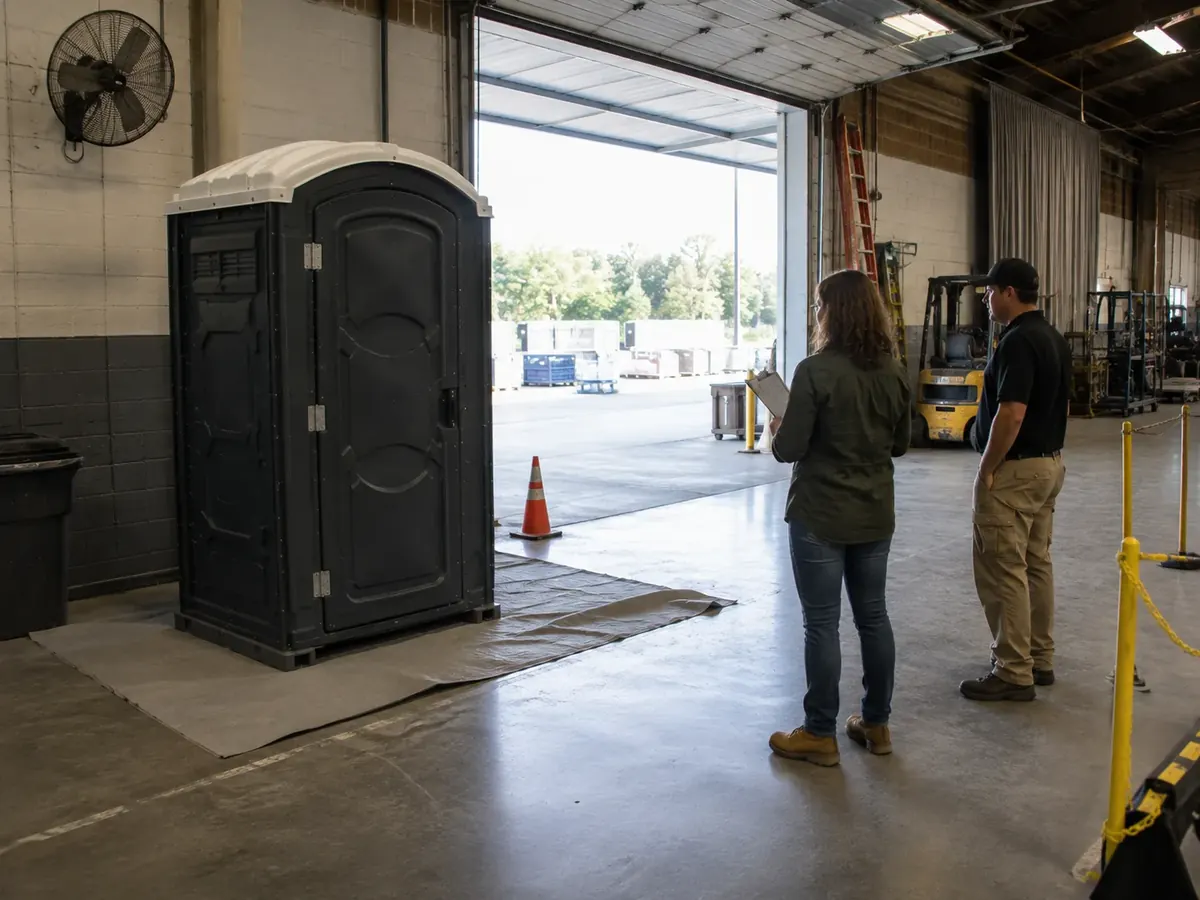
Empty weight
Weight varies by model. As a documented example, PolyJohn lists the PJN3 with a plastic skid base at 165 pounds and a 60-gallon holding tank. Star does not guarantee that a vendor supplies this model.
Accessible units and other equipment have different weights and footprints. Ask for the exact model’s specification sheet, including accessories and liquids present at delivery.
A general article cannot approve a lift or a placement. Use the provider’s operating-load information for a site-specific assessment.
Why the tank dominates
For an illustration, 60 US gallons of water at about 8.34 pounds per gallon adds roughly 500 pounds. Added to a 165-pound shell, that is about 665 pounds.
This is a water-equivalent calculation, not a certified specification or a recommendation to fill the tank. Contents, safe fill limits, and accessories vary. Request the vendor’s expected operating load.
| Equipment | Empty weight | Operating load |
|---|---|---|
| PJN3 manufacturer example | 165 lb with plastic skid base | Depends on contents and accessories |
| Accessible unit | Confirm specification | Include liquids and accessories |
| Handwashing station | Confirm specification | Include fresh and wastewater |
| Restroom trailer | Confirm specification | Check tank contents and rated limits |
Restroom trailers are a different category
Restroom trailers have model-specific dry weights and rated limits. Ask for the model sheet and how water, waste, and accessories affect towing and placement.
That changes the planning entirely. Towing capacity, a firm and level pad that will not sink under a point load, turning and manoeuvring clearance, and the surface bearing the weight all become real constraints. A trailer on a soft verge in wet weather is a recovery problem, not an inconvenience.
When the weight actually matters
Check weight and stability whenever the surface, structure, or access route imposes limits.
Decks, balconies and rooftops
An elevated structure needs a site-specific assessment of load, footprint, access, and servicing. Obtain building-owner and qualified-professional approval; a general weight figure cannot establish suitability.
Upper floors of buildings
Same reasoning, plus the practical question of how a unit gets there and how a service hose reaches it. This is one of the main reasons indoor placement is usually the wrong answer.
Soft or unstable ground
Weight concentrated on a small footprint sinks into soft ground, and a unit that settles unevenly leans. After rain this can happen within a day. Ground protection matting spreads the load and is worth asking about for grass placements.
Surfaces you care about
Ask the owner and provider about appropriate surface protection. Matting does not automatically establish load capacity or prevent damage.
Moving a unit yourself
Ask the operator to relocate equipment according to the model instructions. Liquid contents change the load and balance.
If a unit needs relocating during a rental, call the operator. They will normally service it first — which removes most of the weight — and then reposition it properly. It is a routine request, usually quick, and considerably better than the alternative.
The related planning point: because relocating means servicing first, choosing the right position at the start is worth a few minutes of thought. That decision is also what determines whether the indoor placement question ever arises.
Frequently asked questions
Weight varies by model. PolyJohn lists its PJN3 with a plastic skid base at 165 lb empty. Use the supplied model’s specification and include its contents.
It depends on volume and contents. A water-equivalent illustration is about 500 lb for 60 US gallons; obtain the vendor’s operating-load estimate.
Only after the owner and a qualified professional confirm the actual load, footprint, access, and servicing arrangements.
Request the exact model’s dry weight, tank capacities, rated limits, and towing plan.
Have the supplier handle relocation according to the model instructions. Contents and balance complicate movement.
Sources
Regulations change and local requirements vary. Confirm current requirements with the authority having jurisdiction for your site.
Star Portable Restrooms Editorial Team
Star Portable Restrooms publishes rental planning guides and helps customers make inquiries to local providers. Articles use the sources listed on each page; they are not accounts of equipment owned or jobs performed by Star. Confirm the equipment, price, and service plan with your rental provider.
About Star →
Check availability for your site
Call with your delivery ZIP code, dates, project type, and estimated attendance or crew size.