Do You Need a Permit for a Porta Potty?
The address, property permission, placement, duration, and local authority determine which approvals apply.

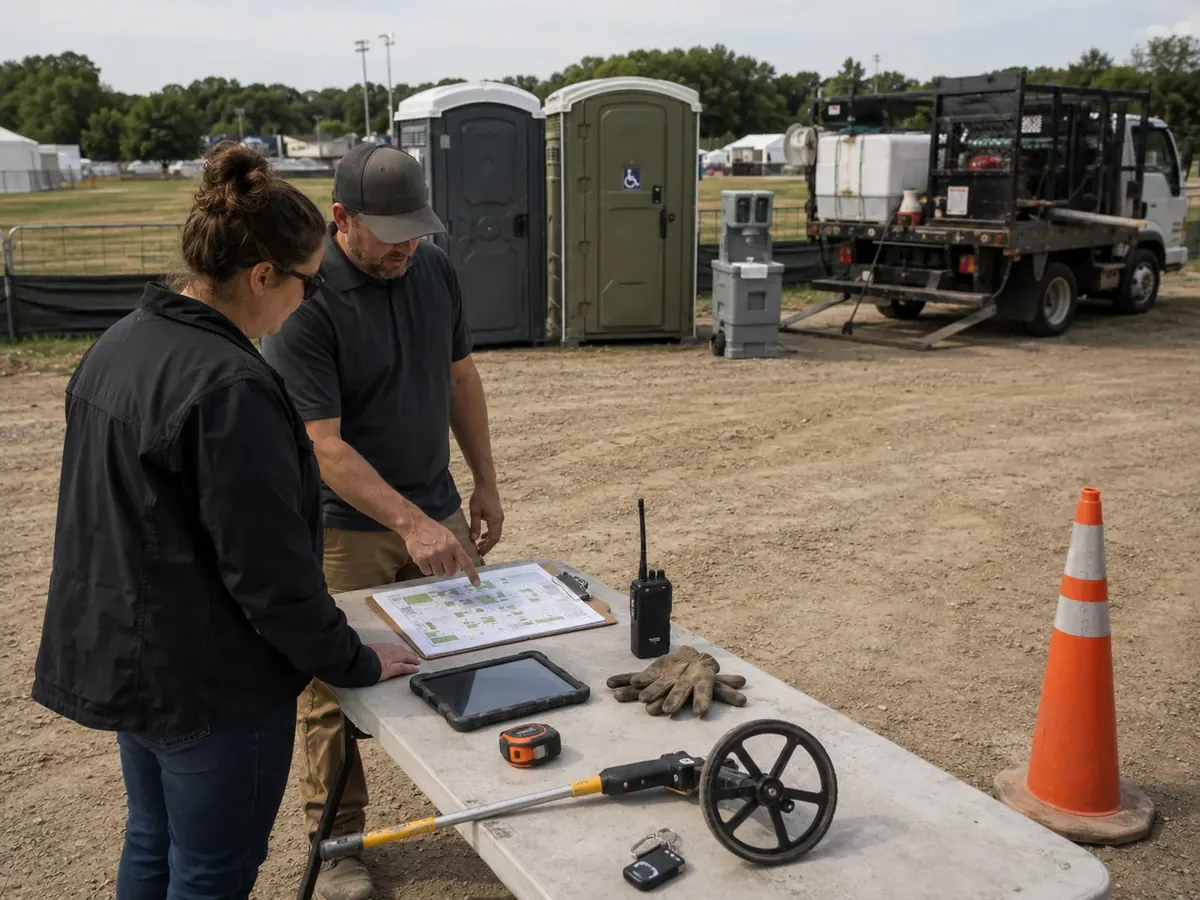
The honest answer
It depends on where the unit sits, how long it stays, and what it is for — and the rules are set locally, which means there is no national answer and anyone offering one is guessing.
What is consistent is the set of factors that trigger a requirement. If you can work out which of them apply to your situation, you will know whether you need to make a phone call, and who to make it to.
Check private-property approvals too
Property permission and municipal approval are different questions. Ask the local office whether the placement, duration, or event needs approval, even on private land.
Check building permit conditions, lease or association restrictions, and venue rules. Do not assume a building permit authorizes every temporary facility.
Share a site plan and the proposed rental dates. The responsible authority can confirm the local requirements.
Situations to discuss with the authority
Ask about the relevant circumstances rather than assuming one approval covers them all.
Anything on public property
Streets, sidewalks, verges, parks, public car parks and any part of the public right-of-way. This normally requires a right-of-way or encroachment permit from the city or county, sometimes with conditions about barricading, reflective marking, and how long the unit may remain. Occupying a parking bay may need its own approval.
Public events
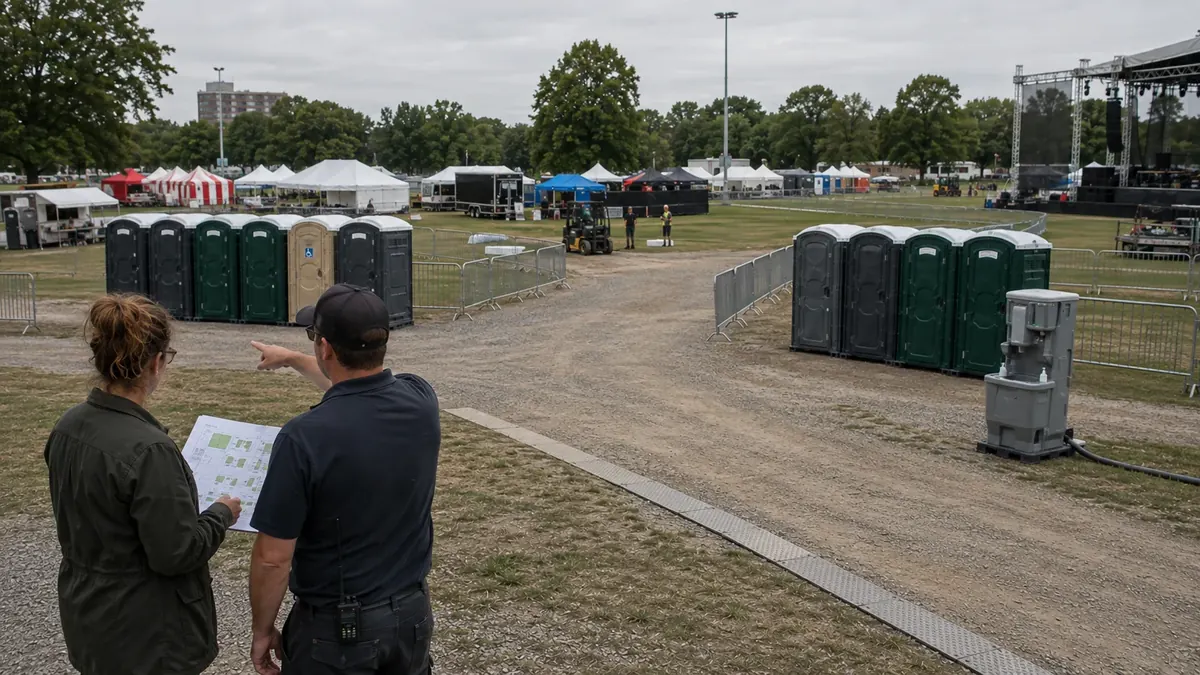
Most jurisdictions require a special event permit for gatherings above a certain size or on public land, and restroom provision is very commonly written into the conditions. Some health departments specify minimum unit counts by expected attendance, and handwashing is frequently mandatory where food is served. The permit may also require accessible units and a servicing plan.
Long-term placement in residential areas
Long-term residential placement — a unit sitting on a front garden for months rather than days — can engage local nuisance, blight or zoning ordinances even on private land. Some municipalities cap how long a unit may remain in a residential zone without additional approval.
Health department involvement
Where food service, temporary food premises, campgrounds, or public assembly are involved, a health authority may have its own requirements covering restroom counts, handwashing provision, servicing frequency, and placement distance from food areas.
Construction sites are a special case
On a construction site the question is usually not whether you may have a portable toilet, but whether you have enough of them.
OSHA 29 CFR 1926.51(c)(1) sets minimum facilities by crew size: one toilet facility for 20 or fewer workers, then one toilet seat and one urinal per 40 workers, and per 50 workers once a crew passes 200. General industry work falls under 29 CFR 1910.141 instead. Some states enforce these through their own OSHA-approved State Plan, which must be at least as effective as the federal standard and may be stricter.
Workplace sanitation requirements and local placement approvals are separate checks. Ask the relevant authority which apply to your site.
Who to ask
One call usually settles it, and the right office depends on the situation. For placement on a street or sidewalk, ask the city or county public works or right-of-way office. For an event, ask whoever issues special event permits — often the city clerk, parks department, or police. For anything involving food or public assembly, ask the county health department. For a construction site, your building department or the OSHA authority for your state.
When you call, have four things ready: the exact address, how long the unit will be there, whether it sits on private or public ground, and what it is serving. Those four answers are usually enough for them to tell you immediately whether a permit applies.
Ask early rather than late. Event permits in particular can have lead times measured in weeks, and restroom provision is often a condition that has to be evidenced before approval — which means you may need your rental confirmed before the permit is granted, not after.
What the rental company can and cannot do
A rental operator can tell you what is typical in a market, supply the unit types a permit requires, provide documentation of the servicing arrangement, and time delivery around approval. Many have seen enough local events to know roughly what a given jurisdiction asks for.
What no operator can do is grant permission, guarantee that a permit is unnecessary, or take responsibility for a placement that turns out to breach a local rule. That obligation sits with whoever controls the site or runs the event. Treat any confident assurance that "you never need a permit for that" as a prompt to verify it yourself, because the person who receives the citation is you.
Frequently asked questions
Ask the authority for the exact address. Property type, placement, duration, and event conditions determine the local requirements.
Do not assume an exemption. Check municipal requirements and property, venue, lease, or association permissions.
Ask the city or county office responsible for public space or the right-of-way about the precise proposed location.
Confirm the permit conditions and site plan with the building department. Workplace obligations are a separate matter.
No. Star passes rental inquiries to providers. Confirm property permission, official approvals, and equipment suitability with the responsible parties.
Sources
Regulations change and local requirements vary. Confirm current requirements with the authority having jurisdiction for your site.
Star Portable Restrooms Editorial Team
Star Portable Restrooms publishes rental planning guides and helps customers make inquiries to local providers. Articles use the sources listed on each page; they are not accounts of equipment owned or jobs performed by Star. Confirm the equipment, price, and service plan with your rental provider.
About Star →
Check availability for your site
Call with your delivery ZIP code, dates, project type, and estimated attendance or crew size.