Can I Put a Porta Potty in My Backyard?
Usually yes, and it is more common than people expect. The constraints are rarely legal ones — they are access and neighbours.

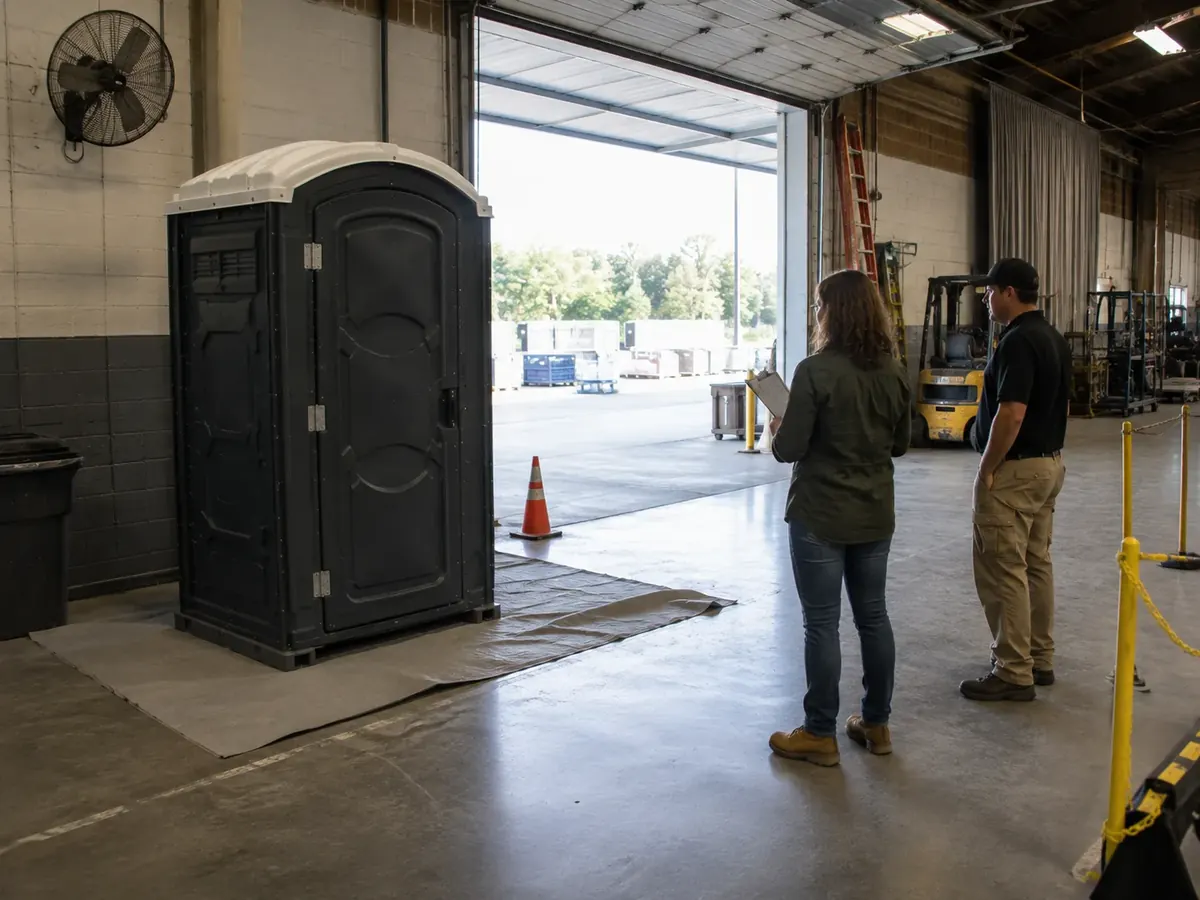
The usual answer is yes
Renting a portable toilet for a residential property is ordinary and generally permitted. Placement on land you own or control, off the public right-of-way, for a defined period, does not typically require a municipal permit.
The situations that drive it are all straightforward: a home renovation where the only bathroom is out of action, a septic system failure, a large party or family gathering, trades working on the property, or an outbuilding project with no plumbing. In each case the alternative — a queue of people through the house, or workers with nowhere to go — is worse for everyone.
Check these before you book
Three things can restrict placement even on your own land, and all three are quicker to check than to fix afterwards.
HOA and deed restrictions
This is the most common obstacle by a wide margin. Homeowner associations frequently regulate what may be visible from the street, and some address temporary structures or equipment directly. A deed restriction or covenant can do the same. If you are in an HOA, read the covenants or ask the board before booking — permission is usually straightforward for a defined renovation period, and far easier to obtain in advance than to argue for after a unit appears.
Local duration limits
A few municipalities cap how long a portable unit may remain in a residential zone, or engage nuisance and blight ordinances when one stays for months. A unit for a three-week renovation is very unlikely to attract attention. A unit that has been there since last spring might.
Rental agreements and shared property
If you rent, or the property is shared, leaseholder or freeholder permission may be needed. Get it in writing rather than assuming.
One rule has no exceptions: the unit must be on your property, not on the verge, sidewalk or street. Those are public right-of-way, and placing a unit there generally requires its own permit regardless of whose project it serves.
Choosing the spot
Placement on a residential property is a balance between four things, and getting it right at the start avoids moving a unit later.
The ground has to be firm and level. A driveway, a patio, a compacted gravel area or firm level lawn all work. Soft ground after rain, a slope, or a soggy corner of the garden do not — a unit that settles or leans is unpleasant to use and harder to service.
A service truck has to reach it. This is the constraint people most often overlook, and it decides more placements than any other factor. The truck parks and runs a hose, and that hose has a practical length limit. A unit tucked behind a locked side gate at the bottom of a long garden may be perfectly private and effectively unserviceable. If you are planning anything beyond a few days, work out the servicing route before you settle the position.
Then consider the neighbours and yourself. A position that is discreet from the street, not directly against a boundary fence, not immediately outside a neighbour's window or their outdoor dining area, and slightly downwind of your own is worth a few minutes of thought. Units are far less noticeable than people fear, but placement is what makes that true.
How long can you keep one
There is no general legal answer, and in practice the limits are servicing and neighbourly patience rather than regulation.
For anything beyond a few days, a service schedule matters more than unit counts do. A unit serving two or three people on a home project may need attention roughly weekly; a unit serving a working crew needs more. That schedule, agreed at booking, is what keeps a residential rental unobtrusive — an unserviced unit in a garden becomes obvious very quickly, in exactly the way a serviced one does not.
Longer rentals generally price better per month than repeated short ones, so if you already know a renovation runs to three months, say so when you call rather than extending in increments.
Which unit to choose
For most residential situations a standard unit is the right choice: no power, no water, minimal footprint, straightforward delivery.
Two situations justify something else. If an elderly or disabled family member, guest or worker will use it, an accessible unit with ground-level entry and interior space is the considerate choice and needs a level approach planned alongside it. And for a wedding or a significant party at home, a restroom trailer changes the guest experience substantially — though it needs power, water, a level pad and towing access, which not every residential property can offer.
If food is being served or trades are handling materials, add a handwashing station. It is inexpensive and it is the part people remember.
Practical delivery notes
Clear the route and the placement area before the delivery window, and make sure someone can direct the driver if the spot is not obvious from the street. If access needs a gate opened, a car moved, or a specific approach, say so when booking rather than on the day.
Watch for overhead obstructions — low branches and cables are the classic residential surprise. And book the pickup at the same time as the delivery, since units left after a project finishes usually continue to be billed.
Frequently asked questions
Generally yes. Placement on private property you own or control, off the public right-of-way, for a defined period does not usually require a municipal permit. HOA covenants and deed restrictions are the most common real obstacle, so check those first.
If you are in an HOA, check the covenants before booking. Many regulate what is visible from the street or address temporary equipment directly. Permission for a defined renovation period is usually straightforward to obtain in advance.
Firm, level ground that a service truck can reach, discreet from the street, not against a neighbour's boundary or outside their windows, and slightly downwind of your own outdoor space. Service access decides more placements than anything else.
There is rarely a fixed legal limit, though some municipalities cap duration in residential zones. In practice the constraint is servicing: anything beyond a few days needs an agreed schedule to stay unobtrusive.
Generally not without a permit. The verge, sidewalk and street are public right-of-way even when the work being served is private, and placement there usually requires approval from the city or county.
Sources
Regulations change and local requirements vary. Confirm current requirements with the authority having jurisdiction for your site.
Star Portable Restrooms Editorial Team
Star Portable Restrooms publishes rental planning guides and helps customers make inquiries to local providers. Articles use the sources listed on each page; they are not accounts of equipment owned or jobs performed by Star. Confirm the equipment, price, and service plan with your rental provider.
About Star →
Check availability for your site
Call with your delivery ZIP code, dates, project type, and estimated attendance or crew size.