How Much Is a Porta Potty per Month?
Compare a regional monthly price example with the service schedule, billing cycle, and extras in your provider’s quote.

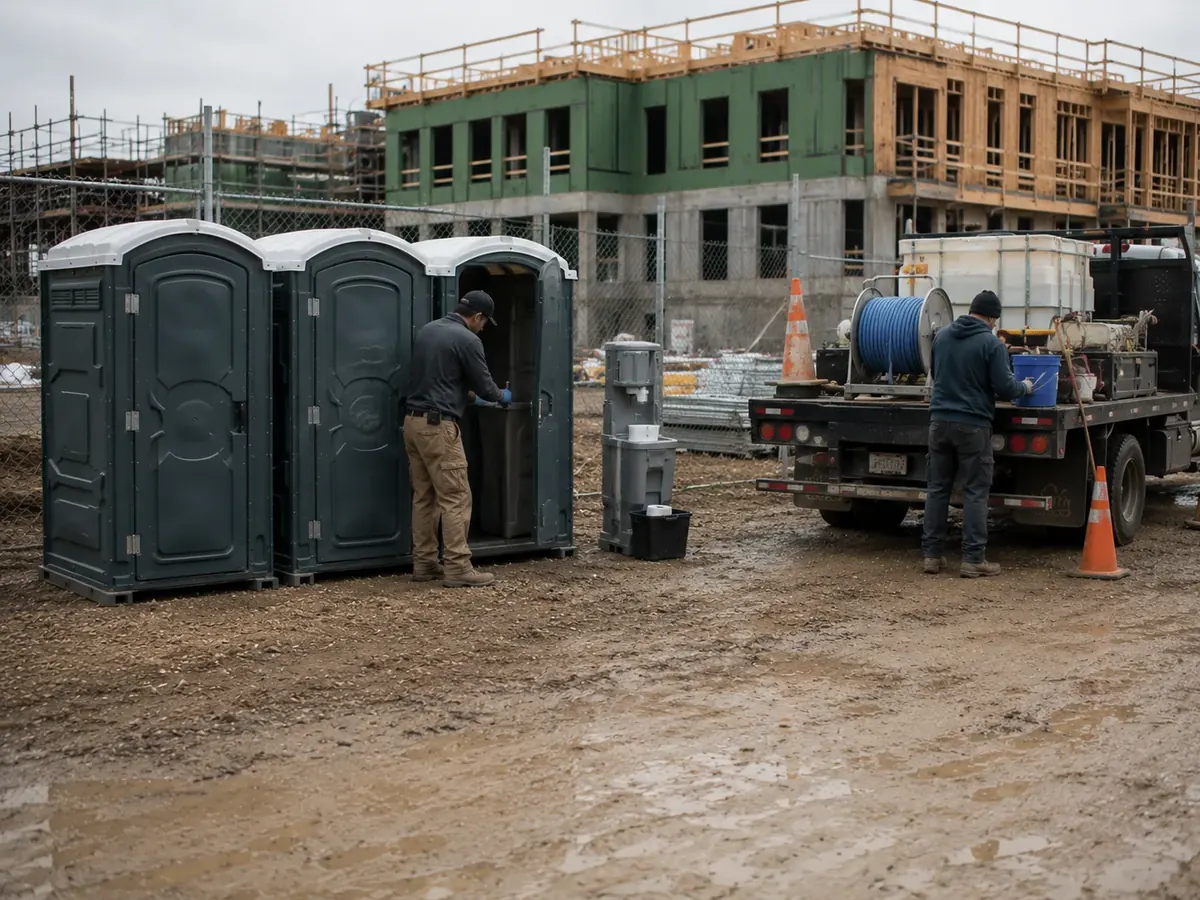
Published monthly prices: a regional example
A Royal Flush’s September 2026 Northeast guide lists these monthly examples with weekly servicing. They are third-party estimates, not Star prices or guaranteed local quotes. Confirm transport, taxes, and the billing cycle separately.
| Equipment | Published monthly estimate |
|---|---|
| Standard unit | $100–$300 |
| Deluxe flushing unit | $175–$550 |
Monthly pricing works differently
On a one-day rental you are essentially paying for a delivery and a collection. On a monthly rental the delivery is amortised across the whole period and the recurring cost of servicing becomes the dominant factor. That is the key mental shift: for long-term rentals, the question is not "what does the unit cost" but "how often does it need attention."
This is why two identical units on two identical projects can be priced differently. A unit used by six people on a quiet residential build and a unit used by forty on an active commercial site need very different service schedules, and the schedule is what you are buying.
What drives the monthly figure
Four inputs set the monthly figure. The first is worth more attention than the other three combined, because it repeats every week for the length of the project.
Service frequency
Weekly service is a common baseline; heavy usage may justify more than once a week, and a lightly used unit may need less. Each visit involves pumping, cleaning, deodorising, and restocking, and each visit carries a cost.
Crew size and usage
Usage determines what frequency is actually appropriate, so it is worth being honest about it at booking. Under-specifying servicing to lower the monthly figure reliably produces complaints, and revising upward mid-project is more disruptive than starting at the right level.
Quantity and site access
Several units on one site share a service visit, so quantity helps here as it does on short rentals. Access matters more than on a single-day rental, because a difficult approach adds time to every visit for the whole rental period rather than once. Where crews handle materials or food is present, handwashing capacity should be planned into the same schedule.
Committed duration
A three-month commitment generally prices better per month than three consecutive one-month rentals, and it makes route planning easier at the supplier end. If you already know the project runs long, say so at the first call.
Budgeting for a long project
Build the budget from four inputs: the unit count, the unit mix, the service frequency, and the duration. Then add a contingency for change — projects extend, crews grow, and second shifts appear. Extending is usually straightforward where the site sits inside an established delivery area, but it is easier when the budget anticipated it.
Review the arrangement periodically rather than setting it and forgetting it. If the crew has halved since the units arrived, the service frequency probably should too. If the project added a night shift, it probably needs revisiting in the other direction. A short call every few weeks on a long project is worth the effort.
Compliance is part of the plan
For construction projects, the unit count is not purely a budget decision — OSHA 29 CFR 1926.51(c)(1) sets minimum facilities by crew size, and that minimum applies for the duration of the project rather than at the moment the units were ordered. A crew that grows past a threshold changes the requirement.
The practical habit is to re-check the count whenever the crew size changes materially. It is a two-minute check that avoids a compliance problem, and it usually coincides with the moment you would want to revisit servicing anyway. Users also need to know what belongs in a unit — proper use has a direct effect on how well a service schedule holds up.
Check billing cycles and extensions
Ask whether “monthly” means a calendar month or 28 days, how partial periods are billed, and how much notice is needed for pickup. Confirm the rate for extra service visits and which supplies are replenished.
Budget the equipment charges for the agreed cycles, plus transport, extra visits, taxes, and agreed access charges. If your crew, shifts, or duration changes, request a revised plan and quote.
| Detail | What to confirm |
|---|---|
| Billing period | Calendar month or four-week cycle; partial periods |
| Included service | Visit frequency, tasks, supplies, and missed-access policy |
| Extensions | Renewal rate, notice, and collection arrangements |
| Extras | Delivery, pickup, additional visits, taxes, and damage terms |
Frequently asked questions
Use the published regional example above for context, then request an itemized quote. Equipment, service visits, billing cycle, transport, and site access affect the actual vendor rate.
Weekly service is a common baseline. Heavier usage may justify more frequent visits and lightly used units may need fewer. Frequency should follow actual usage rather than a default.
Generally yes. A longer commitment usually prices better per month than repeated short rentals and makes service routing more predictable.
Call and revise the plan. Crew changes affect both the appropriate service frequency and, on construction sites, the minimum number of facilities required under OSHA 29 CFR 1926.51.
Scheduled servicing typically includes pumping, cleaning, deodorising, and restocking supplies. Confirm what is included when you agree the schedule.
Sources
Regulations change and local requirements vary. Confirm current requirements with the authority having jurisdiction for your site.
Star Portable Restrooms Editorial Team
Star Portable Restrooms publishes rental planning guides and helps customers make inquiries to local providers. Articles use the sources listed on each page; they are not accounts of equipment owned or jobs performed by Star. Confirm the equipment, price, and service plan with your rental provider.
About Star →
Check availability for your site
Call with your delivery ZIP code, dates, project type, and estimated attendance or crew size.