How Much Do Porta Potty Cleaners Make?
It is a licensed, route-based trade with a commercial driving component — and the pay structure reflects that more than the job title suggests.

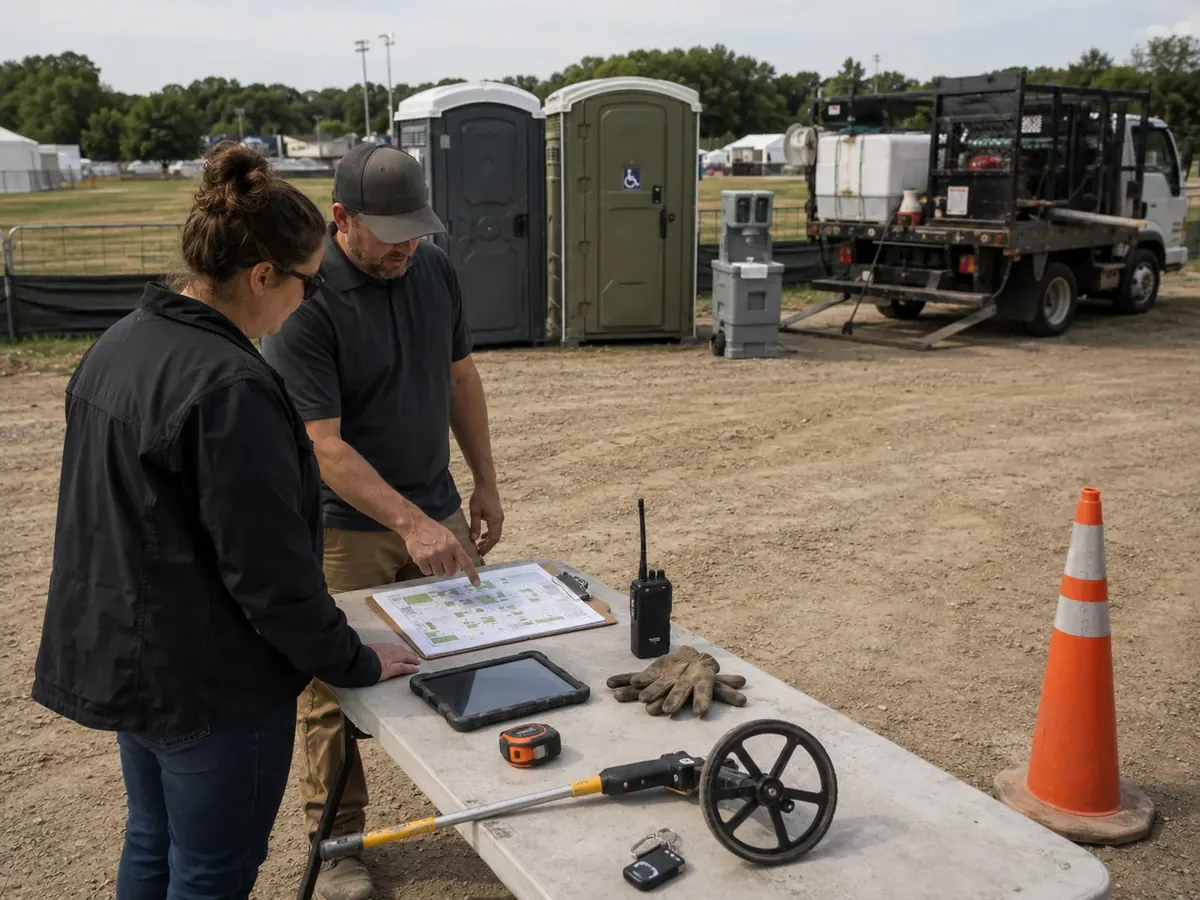
Where to get a real number
BLS does not publish a separate portable-toilet-cleaner wage series. SOC 47-4071, Septic Tank Servicers and Sewer Pipe Cleaners, is related but includes other work.
As checked in October 2026, the OEWS tables list the May 2025 release. Select the occupation and state or metro, and note the year, hourly or annual measure, and mean or median.
Use the category as context for actual job offers, not a guaranteed salary. Ask about hours, overtime, route pay, benefits, and driving qualifications.
How the pay is structured
Most service technician roles are hourly rather than salaried, with several components stacked on the base rate.
Base hourly rate
The foundation, and the figure most job postings advertise. It varies with local cost of living and with how tight the driver market is in that metro. Dense urban routes and high-cost regions pay more, but so do remote areas where operators struggle to recruit at all.
Route or production pay
Many operators pay per unit serviced or per completed route rather than purely by the clock, or blend the two. An experienced technician who knows the route and works efficiently can earn meaningfully more than the base rate implies. It also means a well-planned route is worth money to the technician, not just the employer.
Overtime and seasonality
This trade has a pronounced season. Event work concentrates into spring through autumn, and in northern states construction demand collapses in winter and surges when the ground thaws. Overtime during peak season is common and is a real part of annual earnings, which is why an hourly rate alone understates the picture.
On-call and emergency work
Weekend event servicing, storm response, and emergency call-outs typically carry premium rates. Willingness to take on-call rotations is one of the more reliable ways to raise annual pay in the role.
What raises earnings
A commercial driver licence is the single largest factor. Service trucks carrying substantial liquid loads frequently fall above the weight thresholds requiring a CDL, and the tanker endorsement matters too — liquid loads shift in transit and are treated as a distinct competency. A CDL holder is a materially different hire from a non-CDL one, and the pay gap reflects that.
Beyond the licence, the things that move pay are mechanical aptitude for maintaining pumps and vacuum systems, a clean driving record, customer-facing competence for event and commercial sites, and route knowledge. Someone who can be trusted alone on a route, resolve a problem at a customer site, and keep the truck running is worth considerably more than the base rate.
Career progression usually runs toward route supervision, dispatch and scheduling, fleet maintenance, or operations management. Some technicians move into sales or account management, since they already understand what a site actually needs better than most people who have never worked a route.
What the job actually involves
Servicing work is a driving job with a service component, done largely alone and outdoors. A typical day means loading a vacuum truck, working a planned route of stops, and at each one pumping the tank, rinsing it, cleaning and disinfecting the interior surfaces, recharging the deodoriser, restocking consumables, and noting anything that needs repair.
The unglamorous parts are real and worth naming. It is physical, it is outdoors in whatever weather the season provides, the early starts are genuine, and it involves human waste. Personal protective equipment — gloves, eye protection, appropriate clothing — is not optional, and neither is the handwashing discipline that goes with it.
The parts people underrate are also real. The autonomy is high, the work is genuinely essential rather than performative, demand is stable because construction and events do not stop, and the barrier to entry is low relative to the earning ceiling once a CDL is in hand. Several operators will fund the licence for a promising hire.
How to read a job posting
When you are comparing offers, the advertised hourly rate is the least informative number on the page. Ask four questions instead.
Is a CDL required, and if you do not hold one, will they train and fund it? How is route or production pay calculated, and what does a competent technician actually clear in a typical week? What does the seasonal pattern look like here — are winter hours reduced, and is there off-season work? And what is the on-call rotation, at what premium?
Answers to those tell you far more about annual earnings than a headline rate, and an employer who cannot answer them clearly has told you something too. Pair that with the BLS figures for your own state and you will have a realistic picture rather than a national average that describes nobody.
Frequently asked questions
Compare local job offers with BLS category 47-4071 as context. It includes septic and sewer work and is not a portable-toilet-only salary measure.
Often yes. Service trucks carrying large liquid loads frequently exceed the weight thresholds that require a commercial driver licence, and a tanker endorsement may also apply. It is the single biggest factor in what the role pays.
It offers high autonomy, stable demand, and a low barrier to entry relative to the earning ceiling once a CDL is held. The trade-offs are genuine: physical outdoor work, early starts, and handling human waste with proper protective equipment.
Substantially. Event work concentrates in spring through autumn, and northern construction demand drops sharply in winter and surges after the thaw. Overtime in peak season is a real component of annual earnings.
Common routes are route supervision, dispatch and scheduling, fleet maintenance, and operations management. Some move into sales or account management, where route experience is a genuine advantage.
Sources
Regulations change and local requirements vary. Confirm current requirements with the authority having jurisdiction for your site.
Star Portable Restrooms Editorial Team
Star Portable Restrooms publishes rental planning guides and helps customers make inquiries to local providers. Articles use the sources listed on each page; they are not accounts of equipment owned or jobs performed by Star. Confirm the equipment, price, and service plan with your rental provider.
About Star →Related guides
Check availability for your site
Call with your delivery ZIP code, dates, project type, and estimated attendance or crew size.