Is It Illegal to Use a Porta Potty?
Check who the facility is intended for and ask permission. Site access and placement are separate questions.

The straightforward answer
Portable toilets provide temporary sanitation, including workplace facilities. That does not make every unit available to every passerby.
Check the owner’s or organizer’s permission, site signs, and access restrictions. A general guide cannot determine legal consequences for a particular property.
Using one that belongs to someone else
A toilet on a construction site, at a venue, or inside a ticketed area may be reserved for workers or admitted guests.
Ask before entering and follow signs. Do not cross fences, locked gates, or restricted areas to reach a unit.
Placement on public ground does not establish public access. Ask the organizer who can use it.
Public urination when nothing is provided
If facilities are unavailable, ask the organizer or local authority where public facilities are located. Local rules determine legal restrictions.
Where the real legal questions are
The genuine regulatory questions in portable sanitation are about placement and provision, not use.
Placement and permits
Putting a unit on public property, in a right-of-way, or on a street generally needs permission. Events frequently require a permit that specifies restroom provision. Long-term placement on residential property can engage local ordinances or HOA rules. This is where the actual paperwork lives.
Employer obligations
OSHA 29 CFR 1926.51 sets minimum sanitation facilities on construction sites by crew size, and 29 CFR 1910.141 covers general industry. Failing to provide them is the violation — using them obviously is not.
Accessibility
Under the 2010 ADA Standards, where portable toilets are clustered, at least 5% and never fewer than one unit per cluster must be accessible. Providing none is a compliance problem.
Waste disposal
Tank contents are regulated waste that must go to an approved receiving facility. Discharging them to ground or into a storm drain is an environmental offence, and this is the area where penalties are genuinely serious.
Blocking exits and fire routes
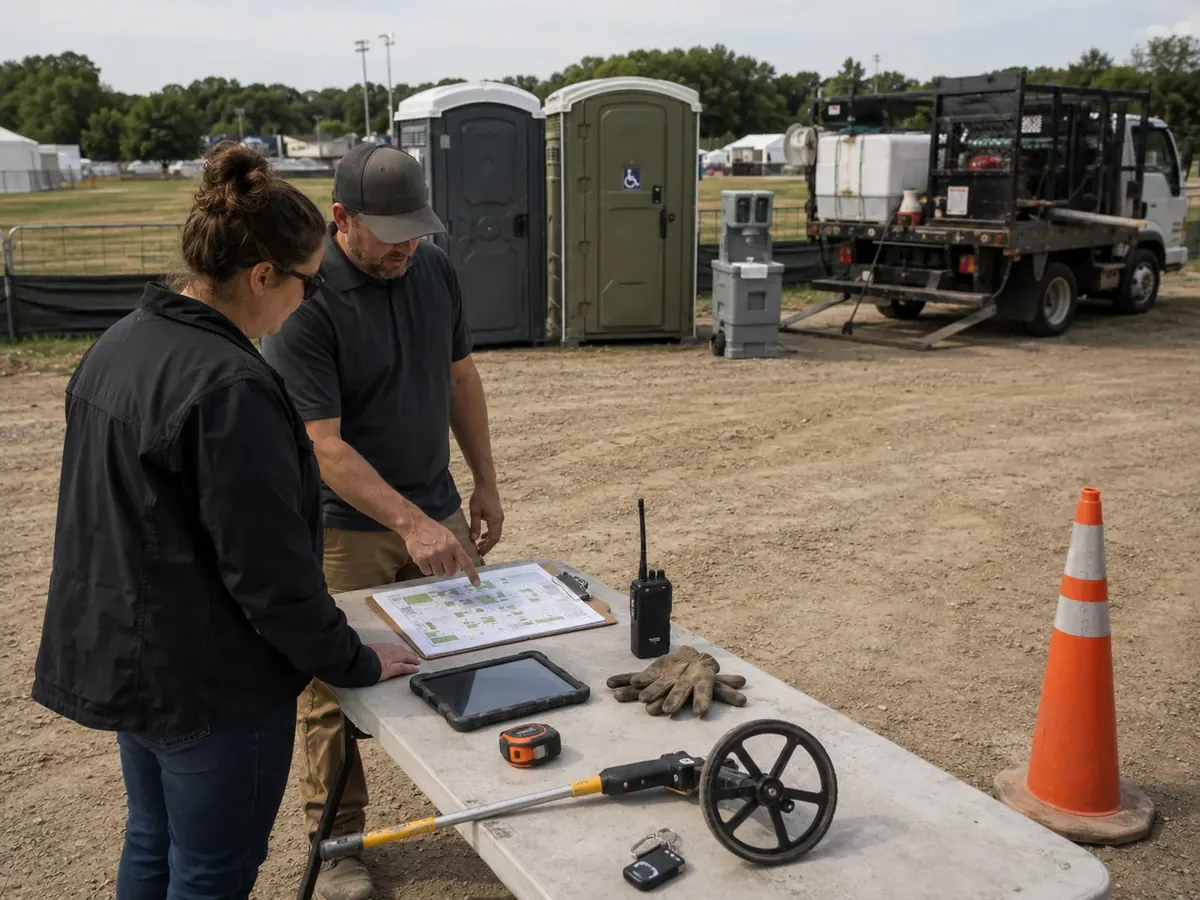
One placement rule has no flexibility in it at all: a portable unit must never block an exit route, an exit door, a fire lane, or emergency vehicle access. That is a life-safety matter and fire officials enforce it directly.
It is worth checking explicitly at events, because units are often positioned late, by people who were not part of the site plan, in whatever gap looks convenient. A cluster that drifted two metres over the course of a setup can end up across an egress route.
If you are unsure
This article is general information rather than legal advice, and rules differ by state, county and city. For anything specific — whether your event needs a permit, whether a unit can sit on your verge, what your jurisdiction requires for accessibility — the answer comes from the authority having jurisdiction, usually the local building department, health department, or the office issuing your event permit.
One phone call to them answers the question definitively for your address, which no general article can.
Frequently asked questions
Ask permission to use the unit and enter the site, and follow local rules. This guide cannot determine the legal position for every location.
Ask the site manager; facilities may be reserved for workers and access may be restricted.
Check the organizer’s rules. Do not assume equipment on public ground or near a venue is available without admission.
They concern placement and provision rather than use: permits for public property and events, OSHA minimums on job sites, ADA accessibility within clusters, and regulated disposal of tank waste.
Never. Units must not block exit routes, exit doors, fire lanes or emergency vehicle access. Fire officials enforce this directly and there is no flexibility in it.
Sources
Regulations change and local requirements vary. Confirm current requirements with the authority having jurisdiction for your site.
Star Portable Restrooms Editorial Team
Star Portable Restrooms publishes rental planning guides and helps customers make inquiries to local providers. Articles use the sources listed on each page; they are not accounts of equipment owned or jobs performed by Star. Confirm the equipment, price, and service plan with your rental provider.
About Star →
Check availability for your site
Call with your delivery ZIP code, dates, project type, and estimated attendance or crew size.